A Front Walkway Built to Hold Up for the Long Haul
Most walkways fail from the bottom up. The surface might look fine for a year or two, then the shifting starts - uneven pavers, cracked edges, gaps that collect water and make the whole thing a tripping hazard. That's what happens when the base gets cut short. We don't let that happen.
Here's what we focus on before a single paver goes down: proper excavation, a compacted gravel base, and clean edge restraints that lock everything in place. That prep work is what separates a walkway that holds up season after season from one that needs to be redone in a few years. It's not glamorous work, but it's the most important part of the job.
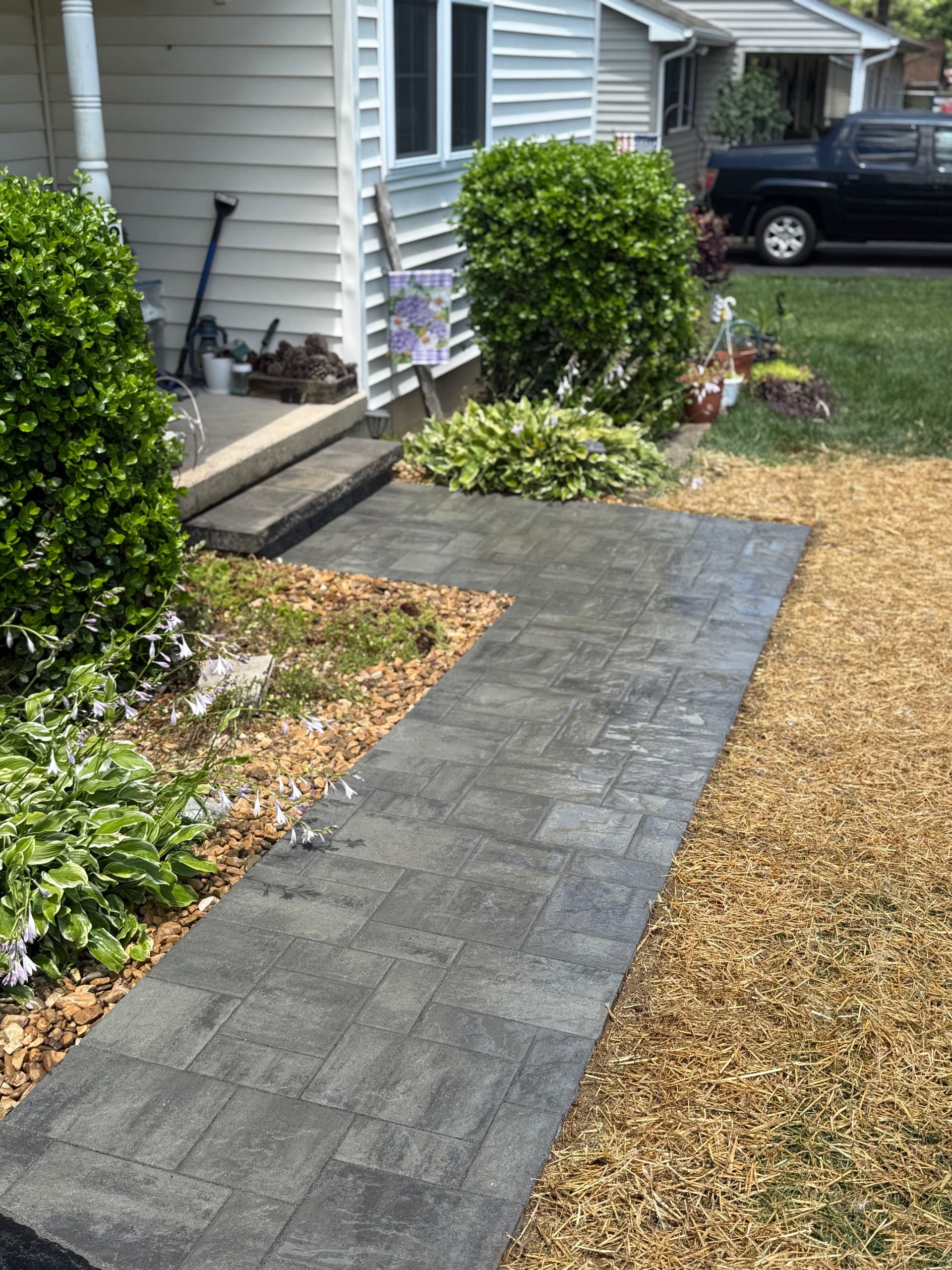
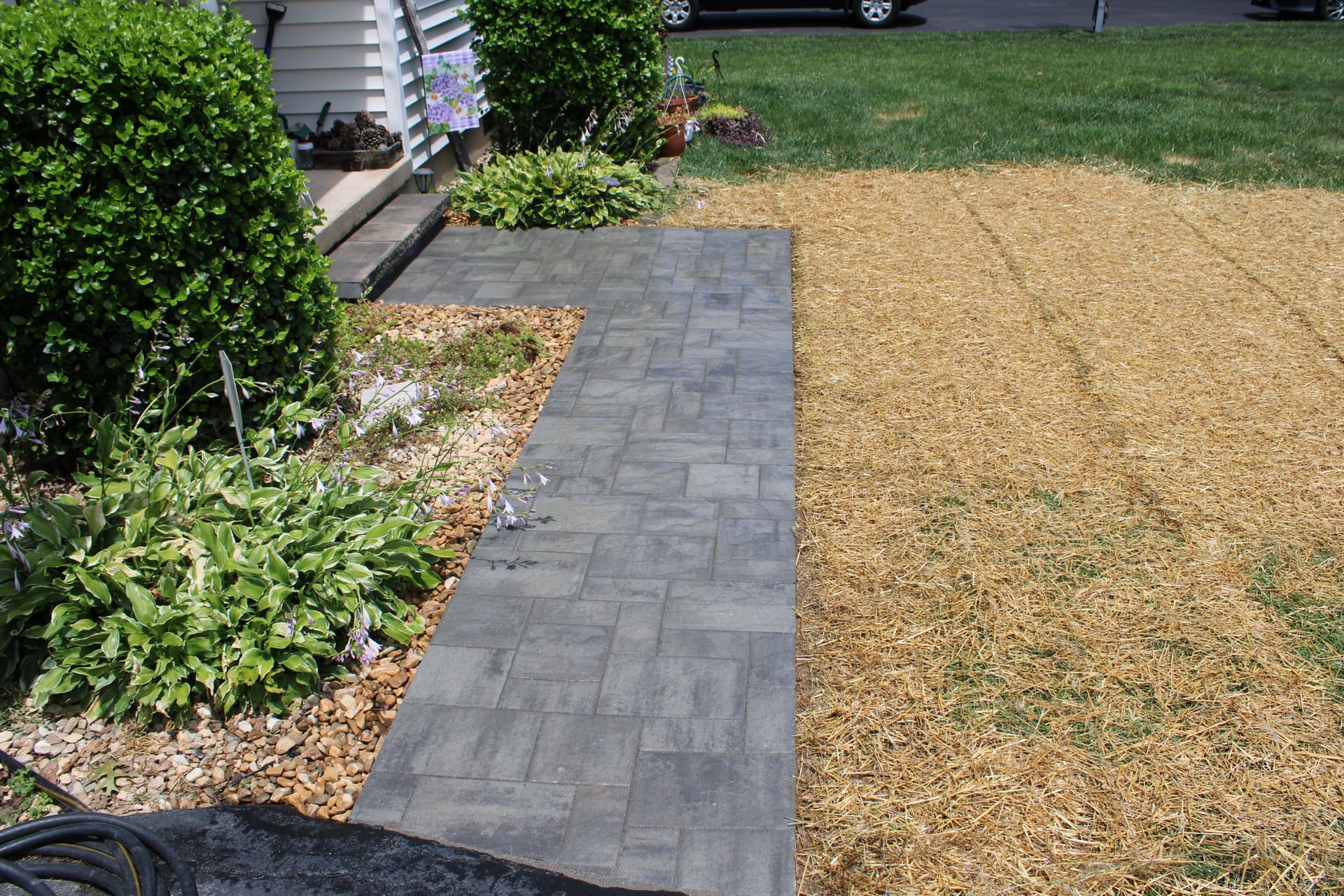
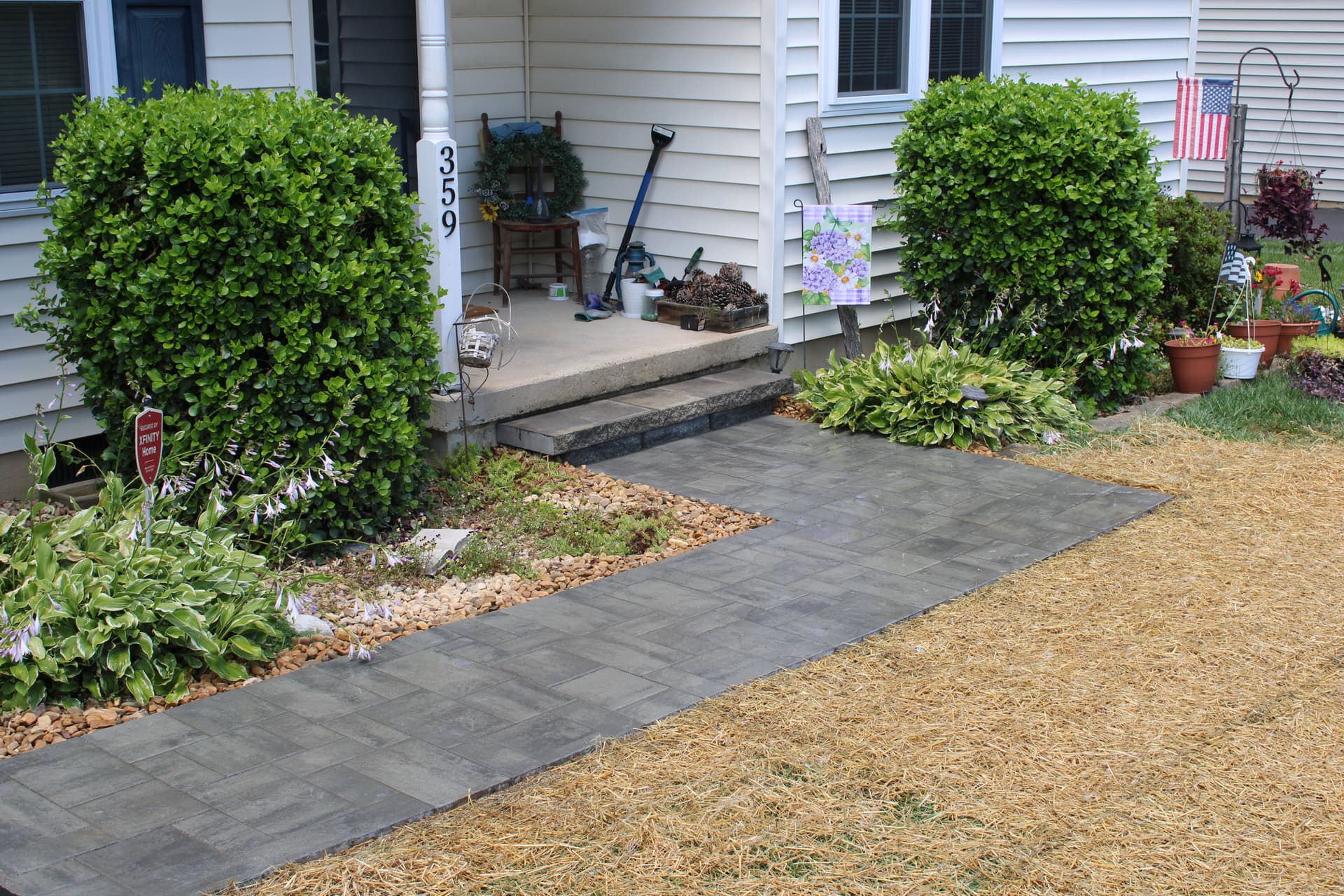
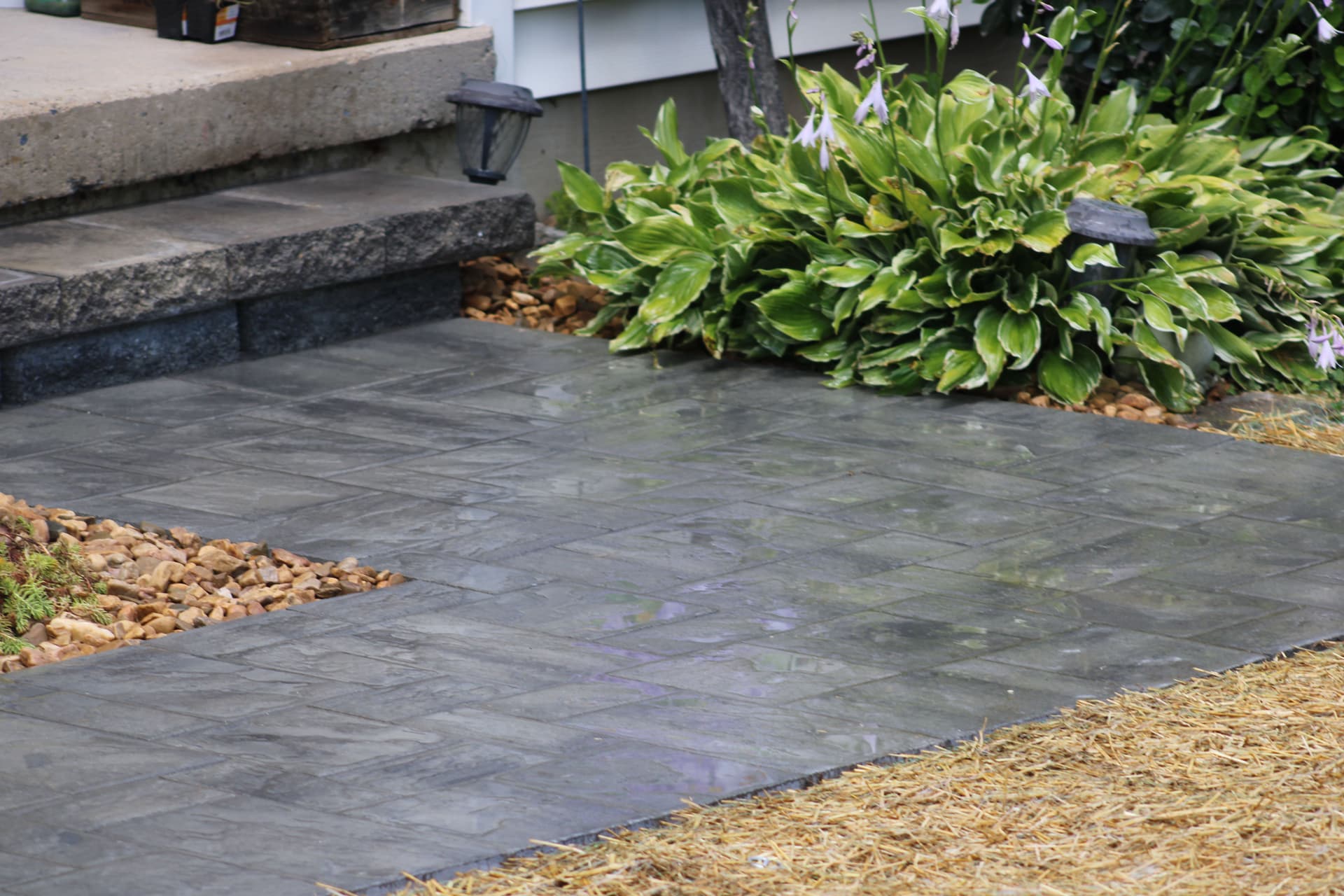
The charcoal pavers we used here have a really clean look - dark gray with a subtle texture that gives them some character without being too busy. They tie in nicely with the existing steps and the surrounding landscape beds. The finished path runs straight from the front yard all the way up to the entry, giving the whole front of the home a much more polished, intentional feel.
Getting the fit right around existing plantings and rock beds takes patience. The beds on either side of this walkway had established hostas and decorative stone that we worked around carefully. A tight, clean edge where the pavers meet the landscape makes a big difference in how the finished product looks - and it helps keep maintenance simple down the road.
This is exactly what our hardscaping services are built for - practical upgrades that add real value to your home's entry. A well-built paver walkway isn't just about looks. It's about having a surface that's stable, safe, and low-maintenance for years to come.